

The King is Dead, Long Live the Guest: How a Bold New Burger King Branding Strategy Fired Its Mascot to Reclaim the Flame
By Ari Vivekanandarajah · 23 March 2026 · 5 min read
Traditional Quick Service Restaurant (QSR) advertising has long relied on eccentric mascots, highly stylised food cinematography, and aggressive discount messaging to capture consumer attention. For decades, the industry standard was built on loud creative assets designed to secure quick clicks and drive-thru visits, often prioritising viral potential over brand substance. This approach, while effective for short-term gains, has increasingly led to a disconnect between polished marketing campaigns and the actual daily dining experience, necessitating a shift in the traditional Burger King branding strategy.
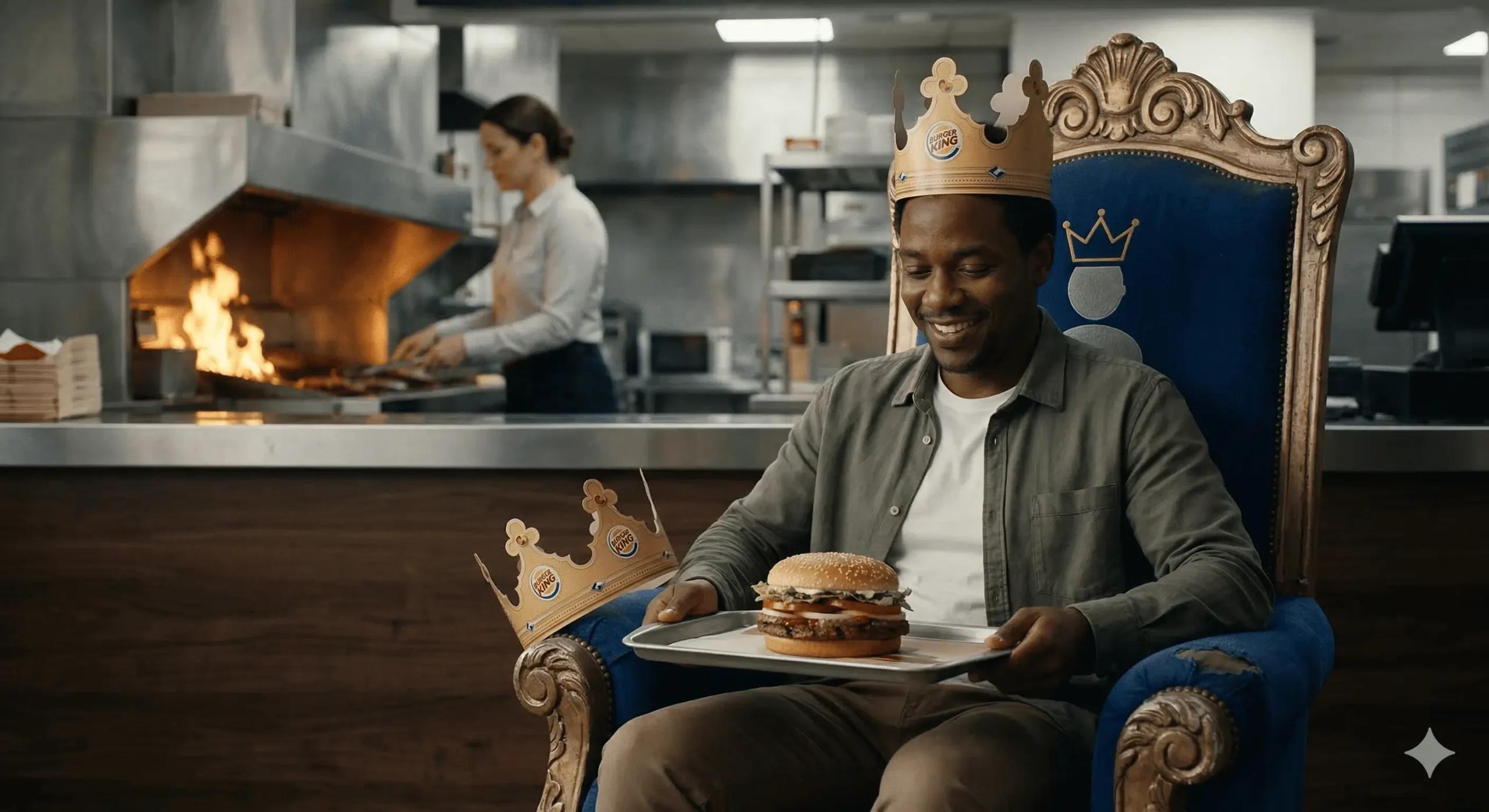
The brand’s 2026 “There’s a New King” campaign marks a significant departure from these established norms, pivoting towards a strategy of radical honesty, transparency, and a guest-centric philosophy. Instead of leaning on the creepy legacy of a plastic mascot, the updated Burger King branding strategy now uses its own corporate leadership to acknowledge past shortcomings and promise a food-first future. This evolution demonstrates a major shift in the industry: a move away from gimmick-led virality in favour of trust-based, operational storytelling that resonates with a more discerning, modern audience.
Why brands must move beyond the Mascot Era
The oversaturation of unhinged social media mascots has reached a breaking point in 2026, often leading to brand fatigue or a reputation for being distracting rather than engaging. For a legacy giant, relying on a polarising icon like the King can alienate modern consumers who prioritise food quality and corporate accountability over absurdist humour. When a mascot becomes the sole focus, the product often fades into the background, which is why a refreshed Burger King branding strategy was required to put the Whopper back in the spotlight.
High-budget Super Bowl or Oscar ads that lack sincerity risk being dismissed as just another stunt by cynical Gen Z and Millennial audiences. Today, consumers increasingly value the bare truth. They gravitate towards brands that admit they are not perfect but are actively improving. By shedding outdated symbols in favour of humanised, relatable leadership, Burger King has found an opportunity to modernise its identity for a demographic that demands authenticity over caricatures.
Burger King: Turning a Mea Culpa into a competitive advantage
The campaign centres on the bold statement that ‘The King is Dead’. This was not merely a tagline; it was a strategic move to officially retire a twenty-year-old brand asset that no longer fit the modern vision. The centrepiece of this Burger King branding strategy is a ninety-second accountability film featuring President Tom Curtis. By choosing a real person over a fictional character, the brand establishes a direct line of communication with its audience that feels earned rather than manufactured.
By admitting the brand lost its way and faltered in recent years, Burger King has created a ‘Day One’ mentality for its $400 million ‘Reclaim the Flame’ investment. This transparency positions the customer as the ‘True King’, effectively shifting the power dynamic from the brand’s ego to the guest’s experience. It demonstrates that a CEO’s vulnerability can be a far more powerful marketing tool than a multimillion-dollar CGI mascot, provided the sentiment is backed by real operational change.
Creative execution: Honesty, authentic visuals, and direct access
Burger King leveraged the 2026 Oscars as a high-stakes platform to signal a total creative reset to a global audience. The campaign’s visual style moved away from airbrushed perfection, using unpolished cinematography that captured real kitchens and authentic food presentation. This grit was intentional, designed to emphasise quality and the craft of flame-grilling over the artificial aesthetics typically found in fast-food commercials.
A key component of this new Burger King branding strategy was the introduction of The Presidential Line. This initiative enabled the brand head to solicit direct text feedback from customers, effectively breaking the fourth wall in corporate communication. By placing the guest’s voice at the centre and using real social media critiques as the foundation for their promises to improve, the brand proved it was listening. This direct access is a tangible manifestation of their commitment to a food-first narrative.
Key takeaways from Burger King’s Honesty Reset
The primary lesson from this reset is that radical honesty strengthens brand trust by aligning marketing promises with operational reality. When a company acknowledges its flaws, it removes ammunition for its critics and lays the foundation for long-term loyalty. Retiring sacred cows, such as famous mascots, signals a genuine commitment to change that resonates more deeply with the public than a simple logo update or a new colour palette.
Furthermore, humanised leadership fosters empathy that a fictional character cannot sustain. Putting a real face to the brand allows for a more nuanced conversation about growth and quality. Addressing operational failures head-on turns what could be a potential PR weakness into a compelling storytelling strength. It shows that the brand is confident enough to be judged on its progress rather than its past.
What Burger King’s campaign signals about the future of QSR marketing
As we move further into 2026, advertising is clearly shifting away from shock and awe and towards sincerity and service. Consumers now expect brands to be real, not perfect, favouring messy authenticity over sterilised corporate personas. The most successful campaigns of this era will be those that combine high-level storytelling with tangible evidence of physical and operational improvements.
Burger King’s willingness to kill its darlings and listen to its harshest critics has set a new gold standard for loyalty in a crowded, sceptical marketplace. This approach demonstrates that a well-executed marketing strategy can do more than sell sandwiches; it can rebuild a brand’s soul by making the guest, not the mascot, the ultimate priority.
FAQs
Why is retiring a high-equity mascot considered a risky but necessary move?
While mascots provide instant recognition, they can also trap a brand in a specific era or tone. Retiring a polarising figure allows a legacy business to remove barriers to entry for new audiences who may have previously found the brand’s persona distracting or unappealing.
How does executive transparency benefit a brand during a large-scale operational transition?
When leadership takes personal responsibility for a company’s direction, it builds a sense of accountability that corporate logos cannot provide. This human connection fosters consumer patience and trust as the brand implements physical improvements across its locations.
Can unpolished visual content perform as effectively as high-budget, airbrushed advertisements?
Yes. In an era of AI-generated perfection, raw and authentic cinematography conveys “the bare truth”. This style resonates with modern consumers who view overly polished visuals as a sign of brand insincerity or hidden quality issues.

Ari Vivekanandarajah
Co-founder & Lead Strategist, Hype Insight
Co-founder of Hype Insight. Two decades turning marketing and technology spend into measurable revenue, and author of the AI Agent Playbook for Businesses.
More from Ari →AI Agents
Custom AI agents that automate real workflows and run your marketing and operations around the clock.
→